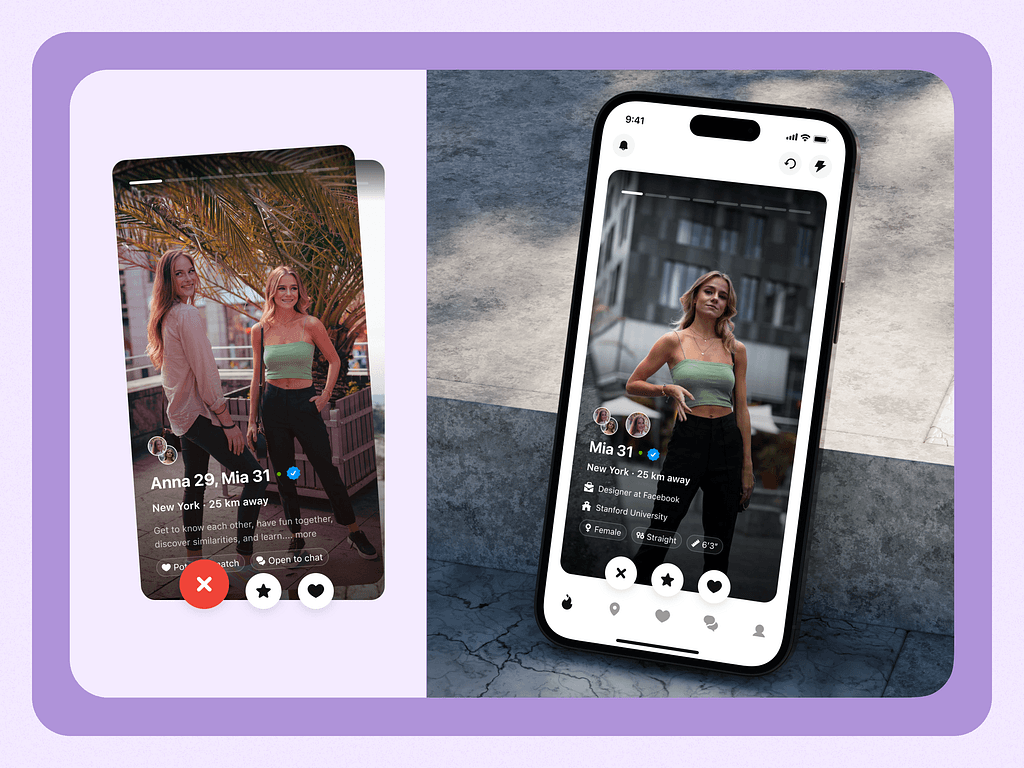






Customer engagement directly impacts retention, conversion rates, and ultimately, business success. A user who actively interacts with your digital product automatically becomes more than just a regular customer. A high degree of engagement involves a willingness to be a brand advocate and significant loyalty. Every business can achieve such interaction with customers, but without relying on chance and luck. It’s the result of deliberate design decisions and strategies. In this article, we look at what the mentioned decisions and strategies imply.

Understanding the psychology behind user engagement
User engagement is keeping people on your platform, but it’s also about creating meaningful interactions that provide value. At its core, engagement is driven by basic psychological principles that impact how consumers interact with digital products. Now let's pay more attention to how psychological factors affect interest from users in businesses’ offerings.
Engagement begins at the deep level of the human psyche
The motivation-ability-trigger framework
Engaging customers is a result that has three prerequisites. The mentioned conditions mean motivation, ability, and a prompt. This framework was popularized by behavioral scientist BJ Fogg. He claims that users need sufficient motivation, the ability to complete an action with minimal effort, and an appropriate trigger or prompt.
When designing digital products, consider:
 What motivates users to engage with your offering
- Is it difficult for customers to achieve the desired result
- What triggers will prompt users to take action at the right moment
Designers who give the right answers to these questions will be able to form an experience that stimulates engagement naturally, without manipulative attempts causing a negative reaction from consumers.
Personalization: the key to meaningful engagement
A personalized approach that takes into account the needs and wants of customers better than a strategy that doesn't pay attention to individual consumer needs. When customers receive experiences tailored to their preferences, behaviors, and needs, they’re more likely to engage actively with your product. Further, we will take a look at how to put personalization into practice to achieve the desired result in interacting with users.
Implementing effective personalization
Personalization goes beyond simply addressing users by name. It involves:
- Customizing content based on user behavior and preferences
- Adapting the customer interface to match individual leverage patterns
- Providing recommendations that align with user interests
- Sending triggered messages at relevant moments in the customer journey
Research shows that 62% of consumers lose loyalty to a brand if they don’t get a personalized experience. By analyzing user data and creating dynamic interactions that evolve with customer behavior, digital products can build stronger connections with their audience. For example, a well-designed onboarding flow that adapts based on user preferences and skill level can significantly increase initial engagement and reduce abandonment rates.
Personalization means adapting to the needs of the user
Gamification strategies that actually work
Gamification has become a powerful tool in digital product design, applying game mechanics to non-game contexts to boost engagement. When implemented thoughtfully, this tool can transform routine interactions into engaging experiences. Below, we will talk about the elements of gamification, their purposes, and the most successful strategies for implementing this concept.
Effective gamification elements
The leveraging of the gamification as a concept focuses on stimulating motivation for interaction and building a process that is sufficiently attractive for the customer to be actively involved in it.
The most successful gamification strategies focus on:
- Challenges and achievements that motivate users to reach specific goals
- Reward systems that provide recognition for progress and accomplishments
- Progression mechanisms that allow users to advance through different levels
- Social elements that enable competition or collaboration with others
Gamification itself will not give you a significant result in the form of high engagement. The effectiveness of this approach depends on what rewards are provided to users. The perception of reward as a meaningless formality should be avoided. Customers for their active interaction with a digital product should receive points that they can use to get something, access to premium functions, or discounts. It should have value, not be a symbol without benefit to the user.
Each gamification element has its own purpose. For more information about this, see the table below:
Gamification ElementPurposeExample ImplementationChallengesMotivate goal completionDaily tasks with increasing difficultyRewardsRecognize achievementsPoints, badges, or tangible benefitsProgress TrackingShow advancementProgress bars, levels, or milestonesSocial ComponentsFoster communityLeaderboards, team challenges
For instance, the language learning app Duolingo demonstrates successful gamification by using points, levels, and streaks to motivate customers to practice regularly. Similarly, fitness platforms like Fitbit leverage challenges and rewards to encourage physical activity.
Gamification turns interaction into a process that has progress and intermediate goals at each stage.
Creating feedback loops that keep users coming back
Feedback loops are essential for maintaining user engagement over time. These loops create a cycle where customer actions lead to responses from the product, which in turn encourage further engagement. To make them work, you need the right mechanisms in place.
Designing effective feedback mechanisms
Feedback signals to users that their actions have a result and do not go unnoticed. Against this background, an emotional connection is formed that encourages the customer to continue interacting.
Strong feedback loops include:
- Immediate responses to user actions
- Visual or auditory cues that acknowledge customer input
- Progress indicators that show advancement toward goals
- Regular updates about new features or content
Feedback should be timely, relevant, and proportional to the action taken. Small actions might warrant subtle reactions, while significant achievements deserve more prominent recognition.
By implementing well-designed feedback loops, digital products can create a sense of momentum that keeps users engaged and coming back for more.
Leveraging social dynamics to boost engagement
Humans are inherently social creatures, and digital products that tap into this aspect of people’s psychology often see higher engagement rates. Social features can transform a solitary experience into a community-driven one. Below, we’ll look at key social features that help foster this real connection and participation.
Social features that drive engagement
Engagement grows when users are organized into a community within which there is a process of active communication based on discussing results, goals, and generally the experience of interacting with the digital product. Effective social elements include:
- Community features that allow users to connect with like-minded individuals
- Sharing capabilities that enable customers to showcase their achievements
- Collaborative tools that facilitate teamwork toward common goals
- Social proof indicators that highlight popular choices or actions
When implementing these features, it’s crucial to consider privacy concerns and provide clear controls over social sharing. The goal is to enhance the user experience through social dynamics, rather than creating pressure or anxiety.
Socializing your product is a direct path to deeper engagement.
Data-driven optimization for continuous improvement
Developing an engaging digital product requires ongoing analysis and optimization based on user data. By monitoring how customers interact with the product, you can identify opportunities for improvement and refine your engagement strategies.
Key metrics for measuring engagement
There are specific indicators that reflect the degree of user interaction intensity with a digital product. To effectively track and improve engagement, focus on:
- User metrics (daily, weekly, and monthly customers’ activity)
- Session duration and frequency
- Feature adoption and usage patterns
- Retention rates over time
- Conversion metrics for key actions
These data points will give you a clear picture of user engagement with your product. Such information, among other things, reflects the problematic stages in the customer journey and those aspects of this process that can provoke various frictions.
The сontinuous improvement process
Improving engagement requires uninterrupted activity. This is an ongoing cycle consisting of the following stages:
- Collect data on user behavior and engagement patterns
- Analyze the gathered information to uncover patterns and available opportunities
- Develop hypotheses about potential improvements
- Implement changes and new features
- Track the impact and iterate on the following results
This process of continuous improvement ensures that your digital product evolves with user needs and preferences, maintaining high levels of engagement over time.
Improving engagement is a multi-step process
Balancing innovation with usability
While innovative features can attract customers, they must be balanced with usability to maintain engagement. Users quickly become frustrated when faced with the impossibility of easily accomplishing their goals, regardless of how cutting-edge a product might be. Let’s look at how to approach that balance deliberately.
Finding the right balance
It is necessary to even out the ease of use and the advanced nature of the digital product. To strike such a balance, follow the recommendations listed below:
- Introduce new features gradually, with clear guidance
- Maintain consistent patterns for core functionality
- Test innovations thoroughly with real users before full implementation
- Provide fallback options for customers who prefer familiar patterns
The purpose of innovation is to make the user experience better. This purpose does not imply more complex clients’ interactions with your offering. By focusing on solving real customer problems in novel ways, digital products can differentiate themselves while maintaining high usability and engagement.
Practical implementation: a holistic approach
Implementing these engagement strategies requires a holistic approach that considers the entire user journey. At Halo Lab, we’ve found that the most successful digital products integrate multiple engagement strategies that work together to create a cohesive experience.
Additional tactics for enhanced engagement
Beyond the core strategies discussed above, there are other concepts of action. Consider implementing the following recommendations:
- Responsive customer support that promptly addresses user queries and issues
- Community building through social media and other channels
- Regular content updates that provide fresh value to returning users
- Thoughtful onboarding that helps customers discover value quickly
There is a correlation between the degree of effectiveness of the engagement strategy and how it meets specific user needs and business goals. The better the strategy copes with the mentioned tasks, the more successful it is. But it’s important to remember that what works for one digital product may not work for another, making customer research and testing essential.
What businesses should remember
Strong engagement is the result of intentional design that reflects how users think, feel, and behave. Personalization, feedback loops, social dynamics, and ongoing optimization all play a role in shaping experiences that feel intuitive and rewarding. When thoughtfully combined, these strategies support retention, encourage interaction, and strengthen product value.
At Halo Lab, we focus on building products that connect with users and deliver measurable outcomes. If you’re looking to improve engagement through smart, user-centered design, reach out through our contact form — we’d be happy to explore how we can support your goals.